

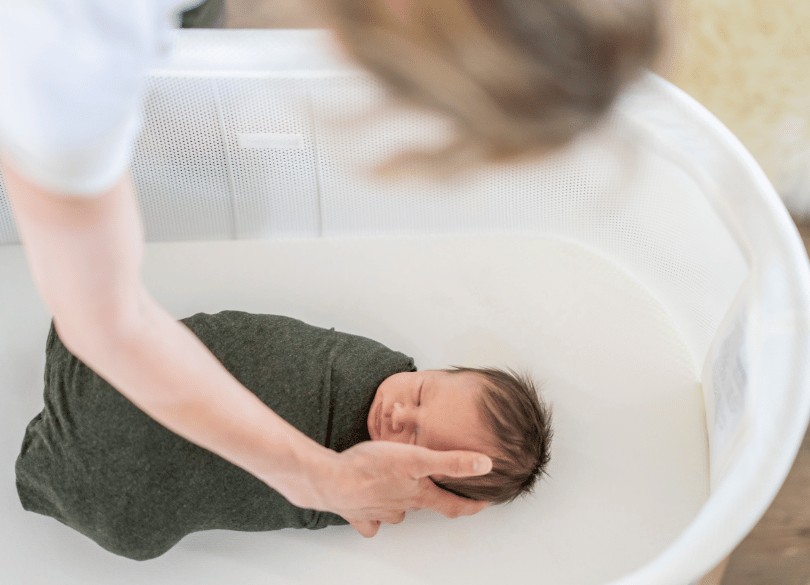
Have you tried swaddling your baby? With the promise of longer sleep, less crying and fussiness, swaddling is a long standing parenting practice that has been around since as early as 4000 BC.
Swaddling has been shown in research to be calming for babies and help them sleep for longer. However, many parents have concerns about swaddling. How do you swaddle safely? What are signs you should stop swaddling? Does swaddling impact a baby’s physical development? Does swaddling make it harder to breastfeed?
All valid questions that we’re going to unpack here.
Let’s start with how swaddling impacts a baby’s physical development. We know that swaddling too tightly around a baby’s hips can contribute to hip dysplasia. This is when a baby’s hip joint doesn’t develop properly, with the thigh bone not fitting properly into their hip socket. Wrap your baby’s hips loosely, and this won’t be an issue.
Some parents wonder whether swaddling can lead children to walk later, but the research doesn’t support this. Rest assured, as long as you don’t wrap your baby’s hips too tightly, there isn’t evidence to suggest that swaddling leads to any negative impacts on a child’s motor development.
Next up, breastfeeding.
Research tells us that babies who are immediately swaddled at birth initiate breastfeeding later and have more difficulty with it. They end up consuming less milk and gain weight more slowly than babies who are not swaddled. What’s going on here? Babies who are swaddled tend to be calmer and less fussy. While this can be a relief for the parent, it’s harder to catch hunger cues because babies aren’t signaling as frequently that they need to be fed. In other words, your baby might be so calm when they’re swaddled that they forget to let you know that they’re hungry.
Your baby’s safety is the number one priority. Here are tips to make sure you are swaddling safely:
- Use a thin blanket, and don’t use weighted swaddles which put too much pressure on your baby’s chest.
- Wrap your baby securely to prevent unwrapping. Loose blankets or fabrics in a baby’s sleep space are unsafe.
- Always place your baby on their back to sleep.
- Keep the blanket loose around their hips to allow their legs to be able to bend up and out.
- Watch for signs of overheating (damp hair, flushed cheeks, rapid breathing).
What are signs that it’s time to stop swaddling?
- When your baby begins to show signs of rolling over. Every baby is different, but this can be as early as 2 months old.
- When your baby can break their arms out of the swaddle.
Swaddle or not, do what works for you and your baby. If you want to try it, make sure to learn how to do so safely.